Fiber Laser Marking, Engraving and Cutting
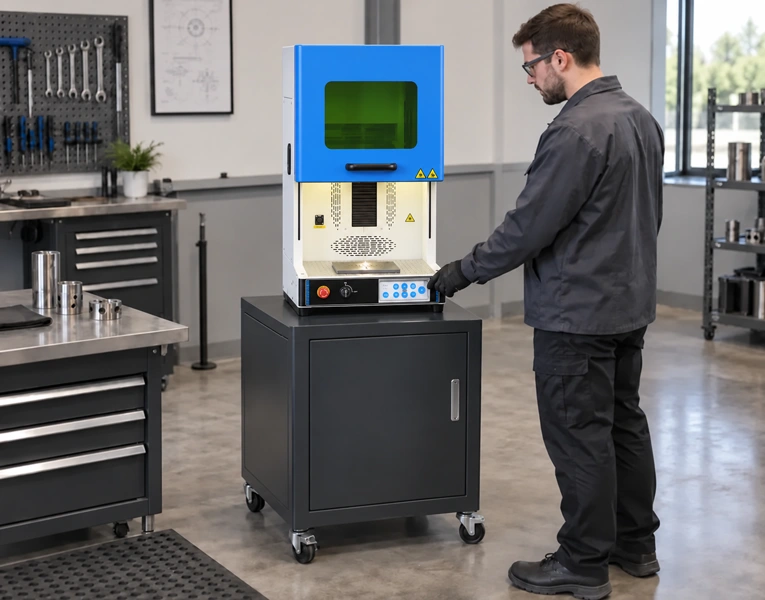
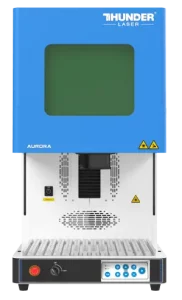
Fiber laser machines can be configured for very different applications, but one system is not normally designed to perform every process. Lower-power fiber and MOPA machines, commonly available in 50W and 100W configurations, are used for permanent marking, detailed engraving and deep engraving. With suitable settings and multiple passes, selected systems can also perform light cutting of thin metals, generally within an approximate thickness range of 0.5mm to 1mm.
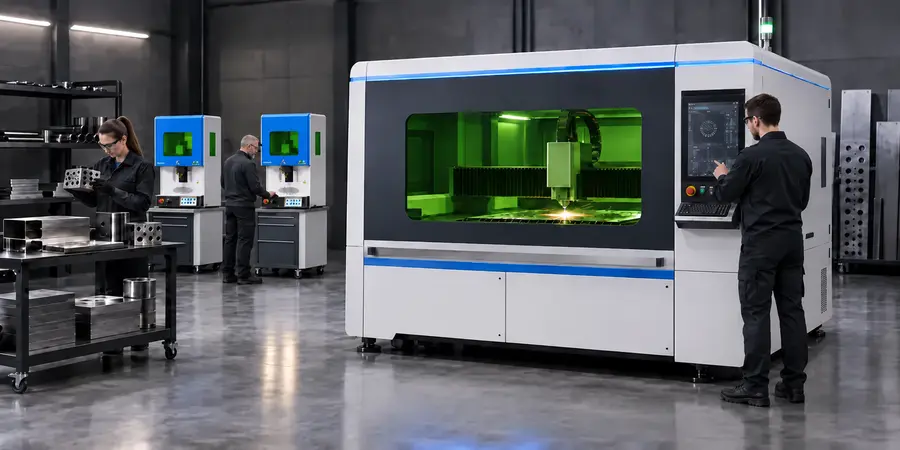
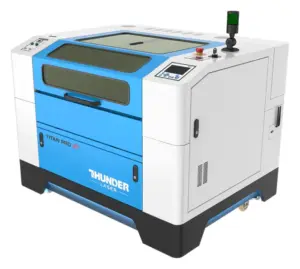
Kilowatt-class fiber laser machines, including 1kW, 1.5kW, 3kW and higher-power systems, are designed for cutting sheet metal. The suitable laser source and power depend on the material, required engraving depth or cutting thickness, working area and production volume.
For marking and engraving applications, view our Laser Marking Machine range. For metal cutting applications, view our Laser Cutting Machine range.
Types of Fiber Laser Machines
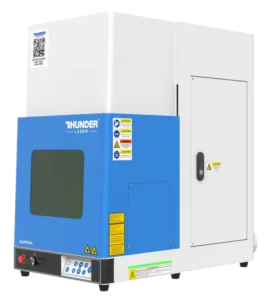
Fiber laser machines are available in different configurations depending on the application. Fiber lasers from 30W to 100W are commonly used for permanent metal marking and engraving, while MOPA fiber lasers provide greater control over pulse duration for applications that require finer detail or greater processing flexibility.
What makes MOPA fiber laser technology to stand out is its ability to create color engravings on stainless steel and titanium. By changing the pulse width and frequency of the laser you are able to oxidize and chemically alter the top layer of the metal. This is how you create color.
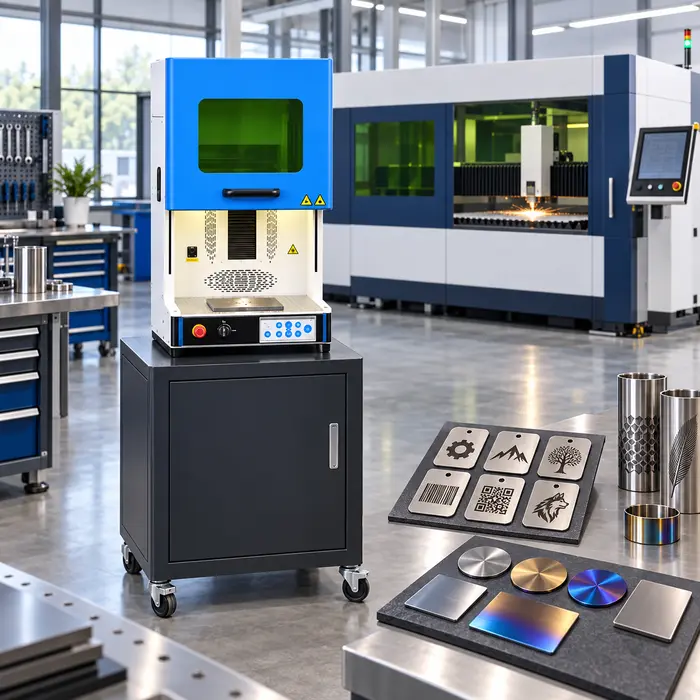
Many of the fiber lasers in the Aurora series use a galvo system whereby the laser beam is directed by mirrors. This allows for very high speeds in marking and engraving. The higher powered lasers for industrial use tend to use a gantry system whereby the physical laser head moves across the material along an X and Y axis.
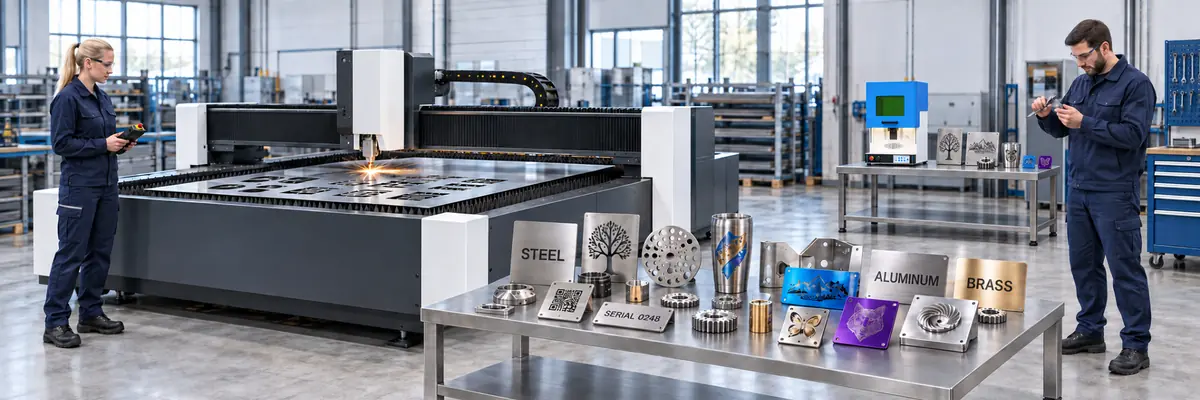
High-power fiber laser machines, typically measured in kilowatts rather than watts, are designed for cutting sheet metal and fabricated components. With an industrial grade 3,000W / 3kW laser you can cut 16mm Carbon Steel, 8mm Stainless Steel, 6mm Aluminium Alloy, 5mm Brass and 2mm Red Copper in a single pass.
Fiber Laser Machine Applications
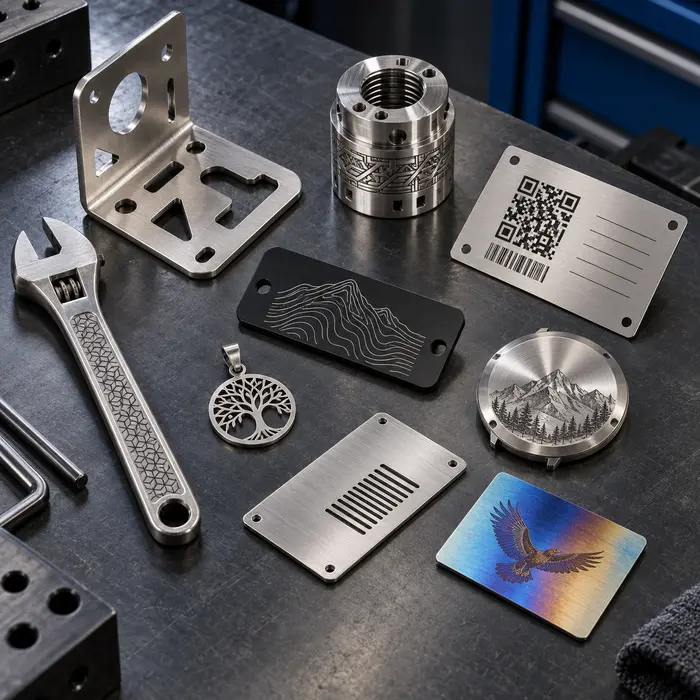
Fiber laser machines are used wherever a permanent and precise result is required on a part or product. Common marking and engraving applications include logos, serial numbers, barcodes, QR codes, rating plates, asset tags, tool identification, jewellery personalisation and decorative designs. The laser creates the result directly on the material without ink, labels or physical contact, making it suitable for one-off custom work as well as repeat production batches.
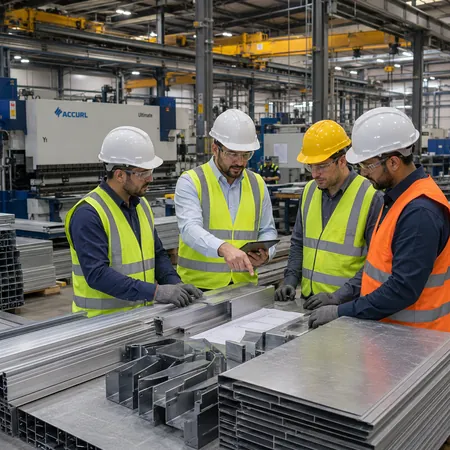
High-power fiber lasers are used in metal fabrication to cut sheet metal into panels, brackets, enclosures, machine components and custom shapes. The right machine depends on more than the application alone: the material, required engraving depth or cutting thickness, part size, desired finish and daily production volume must all be considered. A workshop engraving jewellery and tools will require a very different fiber laser from a fabricator cutting stainless steel sheets.
Materials Compatible with Fiber Laser Machines
Fiber laser machines are best known for processing metals such as steel, stainless steel, aluminium, brass, copper, gold, silver and titanium. These materials can be permanently marked or engraved, while high-power fiber laser systems can also cut metal sheets and fabricated components.
Fiber and MOPA lasers can also process selected plastics, composites, stone, ceramics, glass, leather, coated metals and painted surfaces. The result depends on the laser source, power, pulse settings and the composition or surface finish of the material. Testing may therefore be required when a specific contrast, engraving depth or finish is needed.
The table below shows whether each material can be marked, engraved or cut using the appropriate fiber laser configuration. It represents the capabilities of different fiber laser systems and does not mean that one machine is designed to perform every listed process.
Fiber Laser Compatible Materials |
|||||||
|---|---|---|---|---|---|---|---|
| Material | Mark | Engrave | Cut | Material | Mark | Engrave | Cut |
| Steel | ✓︎ | ✓︎ | ✓︎ | Delrin | ✓︎ | ✓︎ | ✕ |
| Carbon Steel | ✓︎ | ✓︎ | ✓︎ | POM | ✓︎ | ✓︎ | ✕ |
| Stainless Steel | ✓︎ | ✓︎ | ✓︎ | ABS | ✓︎ | ✓︎ | ✕ |
| Silicon Steel | ✓︎ | ✓︎ | ✓︎ | PBT | ✓︎ | ✓︎ | ✕ |
| Iron | ✓︎ | ✓︎ | ✓︎ | Carbon Fiber | ✓︎ | ✓︎ | ✕ |
| Inconel Metals | ✓︎ | ✓︎ | ✓︎ | Stone | ✓︎ | ✓︎ | ✕ |
| Aluminum | ✓︎ | ✓︎ | ✓︎ | Alumina | ✓︎ | ✓︎ | ✕ |
| Brass | ✓︎ | ✓︎ | ✓︎ | Zirconia | ✓︎ | ✓︎ | ✕ |
| Copper | ✓︎ | ✓︎ | ✓︎ | Ceramics | ✓︎ | ✓︎ | ✕ |
| Gold | ✓︎ | ✓︎ | ✓︎ | Nylon | ✓︎ | ✓︎ | ✕ |
| Silver | ✓︎ | ✓︎ | ✓︎ | Polysulfone | ✓︎ | ✓︎ | ✕ |
| Magnesium | ✓︎ | ✓︎ | ✓︎ | Glass | ✓︎ | ✕ | ✕ |
| Titanium | ✓︎ | ✓︎ | ✓︎ | Plastics | ✓︎ | ✕ | ✕ |
| Molybdenum | ✓︎ | ✓︎ | ✓︎ | Makrolon | ✓︎ | ✕ | ✕ |
| Nickel-plated | ✓︎ | ✓︎ | ✓︎ | Santoprene | ✓︎ | ✕ | ✕ |
| Coated Metals | ✓︎ | ✓︎ | ✓︎ | Teflon | ✓︎ | ✕ | ✕ |
| Painted Metals | ✓︎ | ✓︎ | ✓︎ | Leather | ✓︎ | ✕ | ✕ |
Mark: Change the appearance or properties of the material’s surface to create permanent text, graphics, codes or identification, with little or no material removed.
Engrave: Remove material from the surface to create a permanent recessed design, with measurable depth that can range from shallow engraving to deep engraving.
Cut: Direct the laser completely through the material to separate it into individual parts or shapes.
Note: PVC and Vinyl should NOT be used with a fiber laser